

Teaching
OCE 4008: Principles of Oceanography
This course focuses on dynamic motions and life processes in the marine environment. Students will learn about the long-term geologic history of the oceans and recent changes caused by humans. This class is an overview of oceanography for upper-division students majoring in science, mathematics, or science teaching.
OCC 4002 / 5050: Chemical Oceanography
This course is designed to introduce the chemistry of the oceans to beginning graduate-level students, and will cover the chemical composition of seawater, distributions of chemical species in the oceans, processes which add, cycle, and remove chemicals in the sea, the chemistry of marine sediments, and the interactions among chemical, biological, geological, and physical processes affecting the oceans. The course is also appropriate for advanced undergraduates interested in the chemistry of the oceans and other natural waters.
OCC 5052: Aquatic Chemistry
This course focuses on thermodynamics, acid-base and redox reactions in natural waters, solution-precipitation reactions, complex formation, case studies of composition of seawater, and controlling processes.
Mentoring
Polar Impact Mentorship Initative (PIMI)
Lisa is a co-organizer of PIMI, a volunteer-led initiative designed to connect early career polar researchers in historically marginalized groups with mentors in their field. The year-long, virtual program matches mentor-mentee pairs from across the world and organizes community events and seminars on topics such as “What Makes a Mentor?”, “Well Being During a PhD”, and “Meaningful Collaborations in STEM.” The pilot program ran from 2022-2023, and the second year is running from 2024-2025.
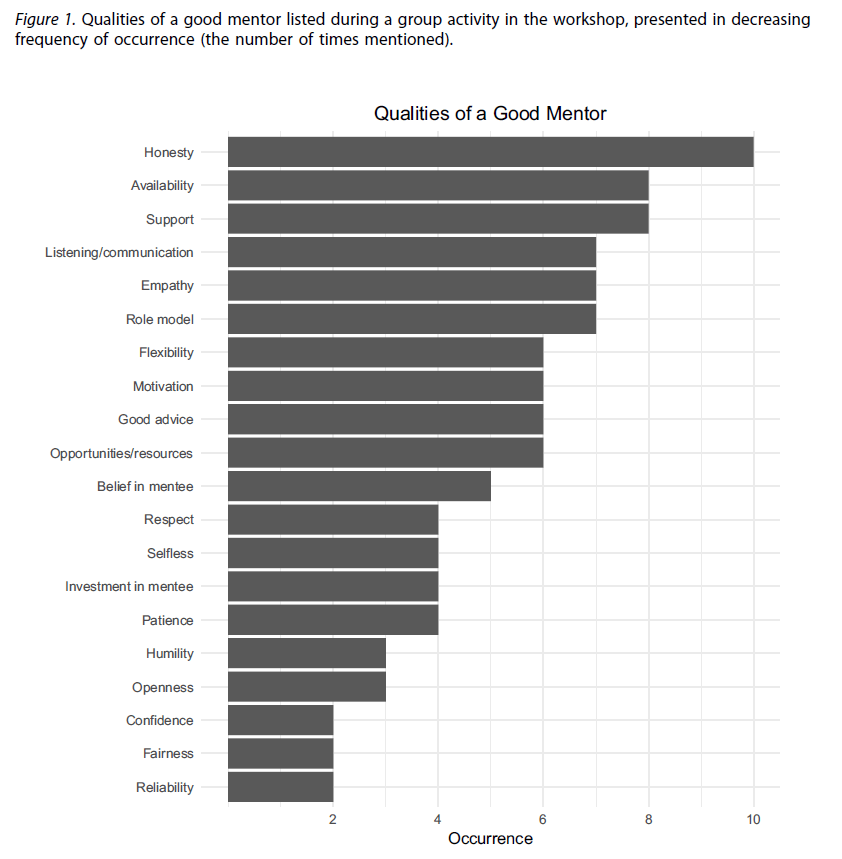
Check out this paper on mentoring and diversity!
This publication resulted from analysis of a Mentoring and Diversity workshop organized at Stony Brook University in 2017-2019 to train faculty and students to be effective mentors. The concepts in this paper — that empathy, honesty, and open communication are the cornerstones of mentoring and collaboration — align well with the core values in the Herbert Lab.
 Herbert Marine Biogeochemistry Lab